



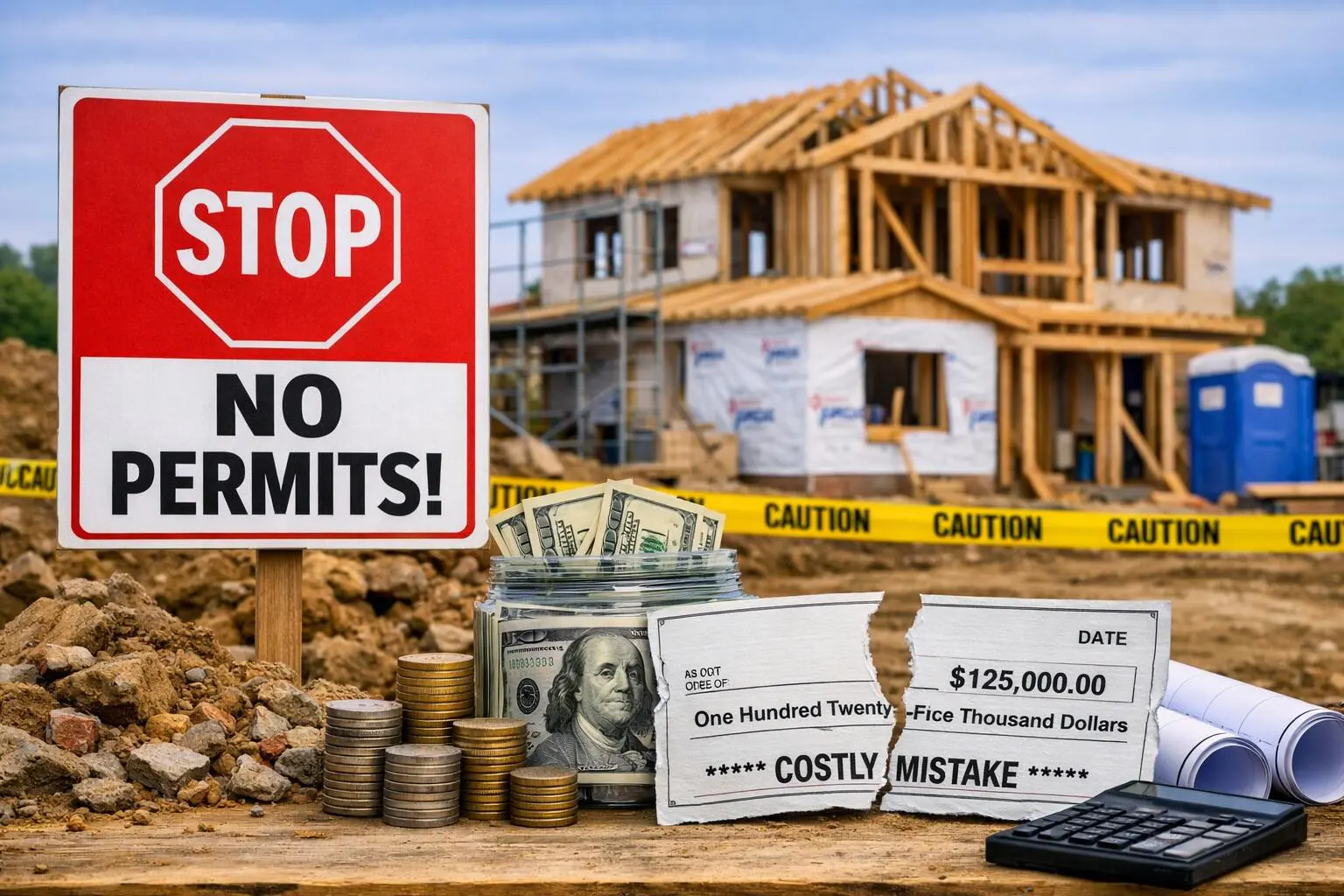
Starting construction with an unlicensed contractor or proper permits is one of the most expensive mistakes a homeowner can make. We’ve been called to many job sites where work was already underway—only to be shut down by the local building department due to missing permits. In nearly every case, the homeowner paid tens of thousands of dollars to correct violations. In one case, the cost exceeded $100,000.
A minority of contractors—especially unlicensed ones—justify skipping permits with lines like:
- Permits require plans, plans cost money, and the permitting process takes months.
- Permits will raise your property taxes because the assessor will know of the improvements.
- Everyone does it this way.
- It’s a small job and can be done quickly.
These explanations can sound appealing if you’re trying to save money or aren’t familiar with the construction process. But the reality is simple: skipping permits almost always costs far more in the long run.
What Can Go Wrong: A Real Example
A homeowner who wanted to enlarge their side yard was quoted $25,000 by an unlicensed contractor to cut into a hillside and build a retaining wall. A concerned neighbor noticed the work and contacted the building department.
What followed was a costly, year-long ordeal:
- The homeowner had to hire an architect for design, our firm for engineering, and a geotechnical company to prepare a soil report.
- The wall—built with improper footings and inadequate reinforcement—had to be demolished.
- Because the property was on a hillside, the wall required deep foundations (caissons), not standard shallow footings.
- The entire process took about a year and a half and cost roughly $100,000 on top of the $25,000 already spent—money that was effectively wasted.
Had the project been done correctly from the start—with proper plans, permits, and a licensed contractor—the total cost would have been lower. What started as a $25,000 “deal” ultimately turned into a $125,000 lesson.
In California, construction work under $1,000—including all labor and materials—does not require a licensed contractor, as long as the work is standalone and not part of a larger construction project.