



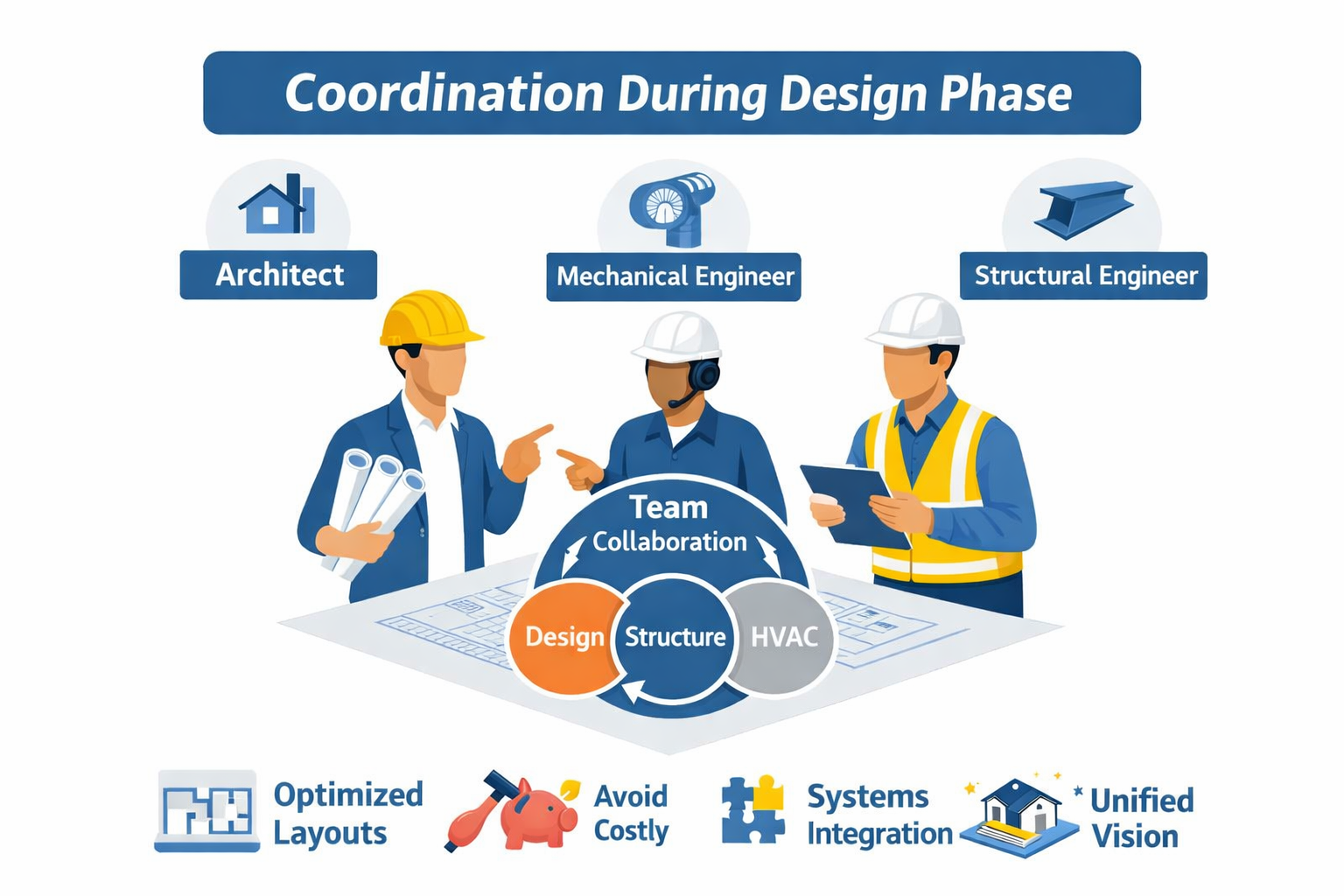
Effective coordination during the design phase is critical in preventing minor oversights from becoming permanent, built-in deficiencies. The images below illustrate a living room where one version contains a significant flaw. To an untrained eye, the difference may not immediately register as an error—but it is.
Early collaboration between the structural engineer, designer, and mechanical team would have aligned the framing layout with the duct work routing. With a coordinated approach, the mechanical systems could have been fully integrated within the ceiling assembly, eliminating the need for the intrusive soffit in the corner.
Coordination is essential because it preserves design intent and avoids unnecessary visual compromises. Structural, mechanical, and architectural systems all occupy the same physical space; when one discipline operates in isolation, the result is often inefficient and awkward adjustments by others.

Living room with soffit for mechanical ducts

Living room without soffit for mechanical ducts